


Sticky Situations
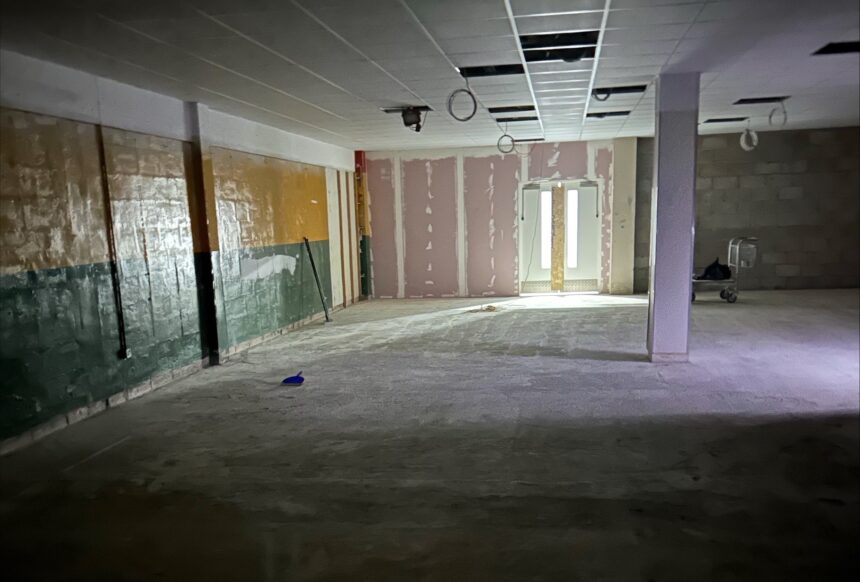
Gary Kenworthy advises on the best approach for creating a smooth wearing surface at a self-storage unit.
While we most often advise on situations where floor coverings will be installed, there are instances where they are not desired or even not recommended, such as in storerooms, workshops and warehouses.
This was the case when we were asked to offer a specification for preparing subfloors and creating a suitably heavy-duty wearing surface in a locker room with an area of approximately 260m2 as part of the refurbishment of a self-storage unit.
The existing subfloor was uneven concrete, with old cementitious smoothing compound and adhesive residues present. The brief for the contractor was to create a smooth surface that could withstand both foot and wheeled traffic.
First Steps to Subfloor Preparation
We advised that the first thing to do should be to mechanically prepare the concrete base to remove all traces of the old smoothing compound, adhesive residues and any other contaminants to achieve a sound, clean, surface dry and dust-free surface.
The surface should then primed with Stopgap P131 primer, diluted with four parts of water, and allowed to dry to promote the application characteristics of a subsequently applied smoothing compound. If the surface was particularly absorbent and the primer dried rapidly, a further application of Stopgap P131 would be necessary to avoid the formation of pinholes caused by the escape of air from the smoothing compound affecting its final appearance, especially important given that it will be left as a standalone wearing surface.
Creating the Base
The flooring contractor would need to choose a suitably heavy-duty floor smoothing compound, such as F. Ball’s Stopgap 300.
For extra durability, they could use Stopgap 800, which is especially designed to deliver a self-smoothing wearing surface for commercial and industrial grade floors where the installation of floorcoverings is not required. It has a special class abrasion resistance, making it perfect for upgrading and renovating new and existing internal floors heavy-duty industrial applications including factories, warehouses and workshops.
Floor Surface Protection
In areas where cleanliness is paramount, F. Ball recommends that the surface is treated with a sealer, such as Stopgap Seal water-dispersed modified polyurethane sealer. It also offers a level of chemical resistance to many commonly found chemicals in industrial/commercial applications.
The final step was therefore for contractors to apply two coats of Stopgap Seal to the surface, creating a hygienic and protective surface to ease maintenance by reducing the adhesion of dirt and other debris.
Gary Kenworthy is F. Ball technical representative for the North West.
F. Ball’s regional technical representatives provide advice to flooring contractors on how to get the most out of F. Ball products, including conducting site visits and producing case-specific reports advising on the best course of action for particular flooring projects. Find out who your technical representative is here.