

The Knowledge: Optimising Wood Flooring Installations
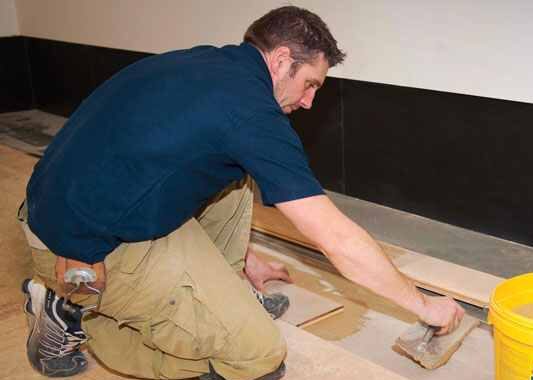
In this series, we tell you what you need to know to ensure flooring installations live up to high customer expectations.
The Knowledge has previously dealt with the technical aspects of each step in the flooring installation process, from subfloor preparation, including the application of a smoothing compound to create a perfectly smooth base for floorcoverings, to selecting an appropriate adhesive.
In the last issue, we brought these elements together to advise on ensuring optimum results when installing a particular type of floor covering: Luxury Vinyl Tiles (LVTs). This time, we look at achieving a long-lasting, visually attractive finish with another floor covering that is popular in high-end domestic installations: wood.
Apart from being desirable for its natural appearance, wood flooring can outlast textile and man-made alternatives, potentially withstanding generations of wear and even improving with age providing it is installed properly. However, wood is more susceptible than textile or resilient floorcoverings to damage from moisture. It can also expand and contract significantly as a result of changes in atmospheric conditions, including temperature and humidity, exerting strain on adhesives and the surface to which floor coverings are bonded. This demands a few unique considerations when installing wood floorcoverings.
Check for moisture
As when installing other types of floorcovering, a subfloor must be suitably sound, smooth and free of any contaminants, including any old adhesive residues. Furthermore, F. Ball recommends undertaking a moisture test, as a routine procedure as part of any flooring installation, it is essential that it is checked for moisture to determine if it is dry enough to receive a floorcovering. To comply with British Standards, subfloor Relative Humidity (RH) levels should be measured using a calibrated digital hygrometer.
If unmanaged, excess subfloor moisture will cause wood to warp and attack adhesives, potentially resulting in the floorcovering cupping or buckling and, ultimately, complete floor failure.
Normally, a liquid waterproof surface membrane will be required to suppress excess subfloor moisture when subfloor RH levels are above 65% where wood floorcoverings will be installed, compared to 75% when installing resilient types of flooring. This is because of the sensitivity of this type of floorcovering to moisture.
Create a base
After checking subfloor moisture and deploying a moisture management solution where necessary, contractors can proceed to apply a smoothing compound to ensure a perfectly smooth base for the receipt of floorcoverings, remembering to prime the subfloor beforehand.
F. Ball usually recommends using a heavy-duty smoothing compound, such as its Stopgap 300, prior to the installation of wood floorcoverings because they are better able to withstand the added strain exerted by the natural expansion and contraction of the wood.
Choose the right adhesive
Finally, contractors must select a specialist wood adhesive to install wood blocks or planks. Utilising the latest technology, flexible wood floor adhesives provide an elastic but strong bond, which will accommodate natural movement of wood flooring over its lifetime, ensuring a long lasting, visually attractive floor finish.
One such flexible wood floor adhesive, F. Ball’s Styccobond B95, provides good initial tack whilst also allowing for repositioning of floorcoverings during the initial stage of drying, a particular advantage when installing wood blocks.
Instant advice
To ensure the correct choice of adhesive for floorcoverings, F. Ball recommends checking the compatibility using its industry-leading Recommended Adhesives Guide (RAG®), which lists adhesives recommended for use with over 6,000 floorcoverings, produced by over 200 flooring manufacturers. The RAG® is available on the F. Ball website, downloadable as a free app, as well as a printed booklet. Alternatively, see floorcovering manufacturer’s instructions for advice.
F. Ball’s Technical Service Department is also on hand Monday to Friday, 8.30am–5.00pm, to answer any questions you might have about installing wood floorcoverings or floorcovering-adhesive compatibility.